A Guide to Computer Vision in Agriculture: Mastering Data Annotation for Precision Farming with Scematics

Share
  • The agriculture industry is experiencing a revolutionary transformation driven by artificial intelligence and computer vision technologies. The data annotation i.e., image and video annotation tool has become a significant need of the hour in revolutionizing Agri. With global food demand projected to increase by 70% by 2050. Precision farming through computer vision has become essential for sustainable agricultural practices. This technological evolution addresses critical challenges in modern farming while optimizing productivity, resource utilization, and environmental sustainability.Precision farming through computer vision has become essential for sustainable agricultural practices. This technological evolution addresses critical challenges in modern farming while optimizing productivity, resource utilization, and environmental sustainability.
  • https://www.fao.org/fileadmin/templates/wsfs/docs/expert_paper/How_to_Feed_the_World_in_2050.pdf

    The Power of Computer Vision in Modern Agriculture

    A Guide to Computer Vision in Agriculture: Mastering Data Annotation for Precision Farming with Scematics
    https://mindtitan.com/resources/industry-use-cases/computer-vision-in-agriculture/

    Computer vision technology in agriculture enables machines to interpret and analyze visual information from crops, fields, and livestock, transforming traditional farming into data-driven precision agriculture. This technology processes vast amounts of visual data through advanced algorithms, enabling farmers to make informed decisions that enhance productivity while minimizing resource waste.The integration of computer vision with agricultural practices delivers measurable outcomes. Research demonstrates that precision agriculture enhanced U.S. crop yields by 4%, with potential increases to 6% through broader adoption. Agricultural companies implementing computer vision solutions report resource cost reductions of 20-40%, yield increases of 15-30%, and labor cost savings of 30-50%.

    Core Applications of Agricultural Computer Vision

    Crop Monitoring and Health Assessment

  • Computer vision systems excel in continuous crop health monitoring through multispectral imaging and drone-based surveillance. These systems analyze leaf color, texture, and morphology to detect subtle changes indicating disease, nutrient deficiencies, or water stress before they become visible to human observers. Advanced algorithms can identify specific plant diseases with accuracies exceeding 92%, enabling targeted interventions that prevent widespread crop damage.
  • Real-time monitoring capabilities allow farmers to track vegetation health using NDVI (Normalized Difference Vegetation Index) analysis, providing precise insights into crop vigor and growth patterns. This continuous surveillance approach reduces crop losses through early detection and timely treatment, significantly improving overall farm productivity.
  • Precision Disease and Pest Detection

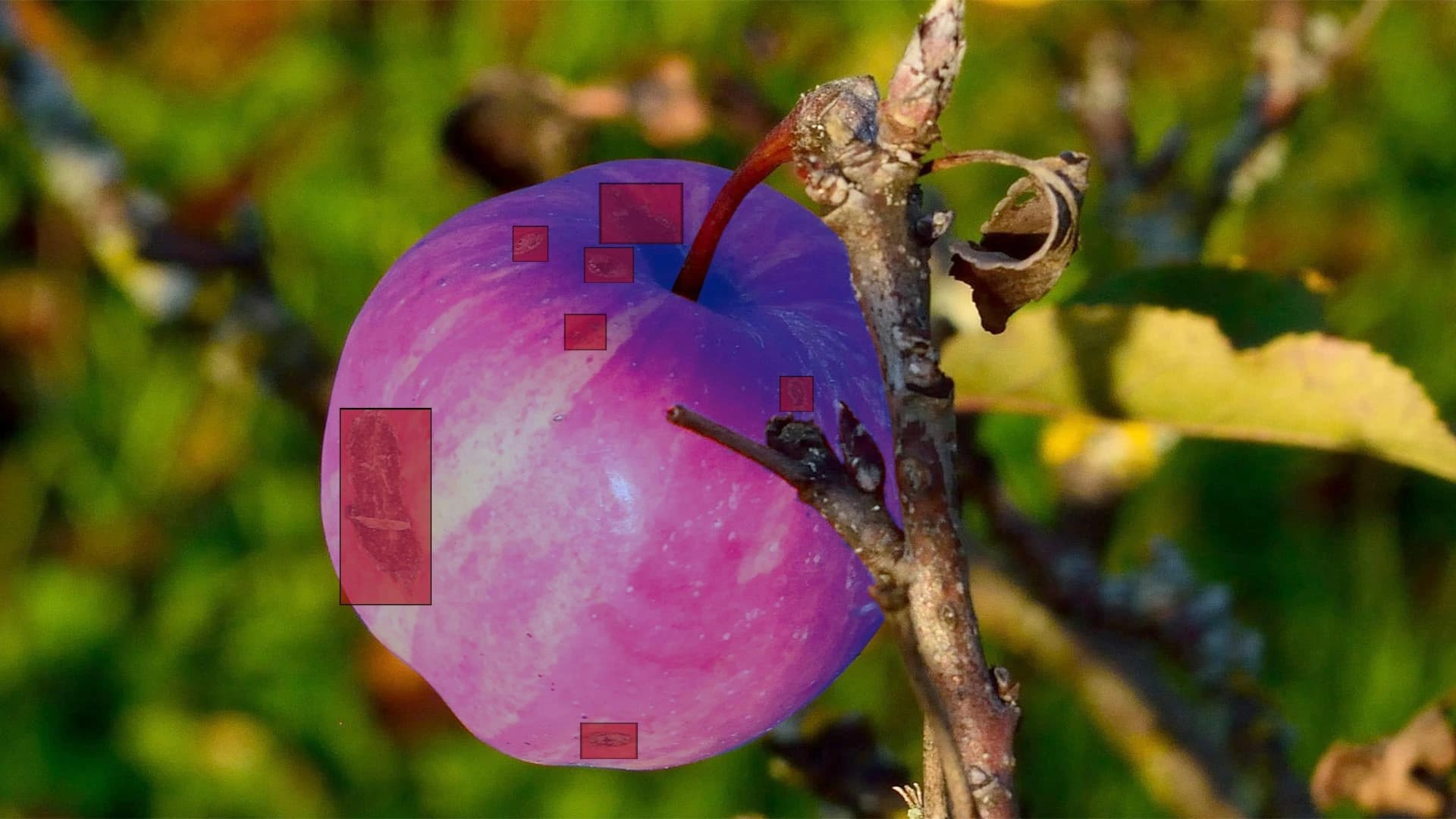
  • Early disease detection represents one of computer vision's most critical applications in agriculture. AI-powered systems analyze high-resolution imagery to identify disease symptoms at the cellular level, often days before manual inspection would detect problems. This early intervention capability enables farmers to apply targeted treatments, reducing pesticide usage by up to 77% while maintaining crop health.
  • Machine learning models trained on extensive agricultural datasets can distinguish between various diseases, pests, and beneficial organisms with remarkable precision. This specificity allows for customized treatment protocols that address exact crop needs while minimizing environmental impact.
  • A Guide to Computer Vision in Agriculture: Mastering Data Annotation for Precision Farming with Scematics

    Automated Weed Detection and Management

  • Computer vision technologies revolutionize weed management by accurately distinguishing between crops and unwanted vegetation. Precision spraying systems equipped with computer vision can achieve herbicide reductions of up to 90%, delivering targeted treatments only where needed. This targeted approach significantly reduces chemical usage, operational costs, and environmental impact while maintaining effective weed control.
  • Advanced systems like the See & Spray technology demonstrate up to 77% reductions in herbicide usage during crop monitoring operations, showcasing the substantial resource savings achievable through precision weed management.
  • Harvest Optimization and Yield Prediction

    Intelligent Harvesting Systems

  • Computer vision enables precise crop selection during harvest operations, ensuring optimal timing and quality standards. Automated harvesting systems use visual analysis to assess fruit ripeness, size, and quality, selecting only produce that meets specific criteria. This precision reduces post-harvest losses and improves overall crop value.
  • Yield estimation through computer vision provides farmers with accurate harvest forecasts weeks before actual harvesting. These predictions support better resource planning, supply chain management, and marketing decisions, contributing to improved farm profitability.
  • Quality Control and Grading

  • Automated quality assessment systems analyze harvested crops for size, color, surface defects, and other quality parameters. Computer vision-powered sorting machines achieve high accuracy in detecting defects and foreign materials, enhancing product quality while reducing waste. This automated approach significantly improves efficiency compared to manual sorting processes.
  • Market Growth and B2B Opportunities

  • The precision farming market demonstrates robust growth trajectories, with the global market valued at USD 10.5 billion in 2024 and projected to reach USD 27.3 billion by 2035. The AI in precision farming segment specifically shows even stronger growth, expanding from USD 946.99 million in 2025 to USD 3.04 billion by 2035 at a CAGR of 12.37%.
  • B2B market opportunities are particularly significant, with precision agriculture technologies showing strong ROI potential. Investment in GPS guidance systems demonstrates payback periods of 1.5-3 years with ROI percentages of 20-30%. Variable rate application technologies show similar returns, with payback periods of 2-4 years and ROI percentages of 15-25%.
  • Large farms over 1,000 hectares currently represent 55% of the precision farming market, while small farms under 100 hectares show the highest growth rates at 13.20% CAGR. This trend indicates expanding market accessibility across all farm sizes, driven by decreasing technology costs and improved accessibility.
  • Powering Agricultural AI with Precision Data

  • We play a crucial role in enabling agricultural AI through specialized data annotation and dataset creation services. The platform provides end-to-end data solutions specifically designed for agricultural automation needs, delivering precisely labeled datasets that power computer vision models in farming applications.
  • Expert-Driven Annotation Services

  • The platform leverages expert annotators with over years of CGI and computer vision experience, ensuring high-quality datasets tailored to specific model requirements. This expertise is critical for agricultural applications where precision directly impacts farm productivity and profitability.
  • Our annotation services support various agricultural computer vision applications including crop classification, disease identification, weed detection, and growth monitoring. The platform's AI-assisted labeling capabilities accelerate dataset creation while maintaining the accuracy essential for reliable agricultural AI models.
  • Edge Case Monitoring and Model Improvement
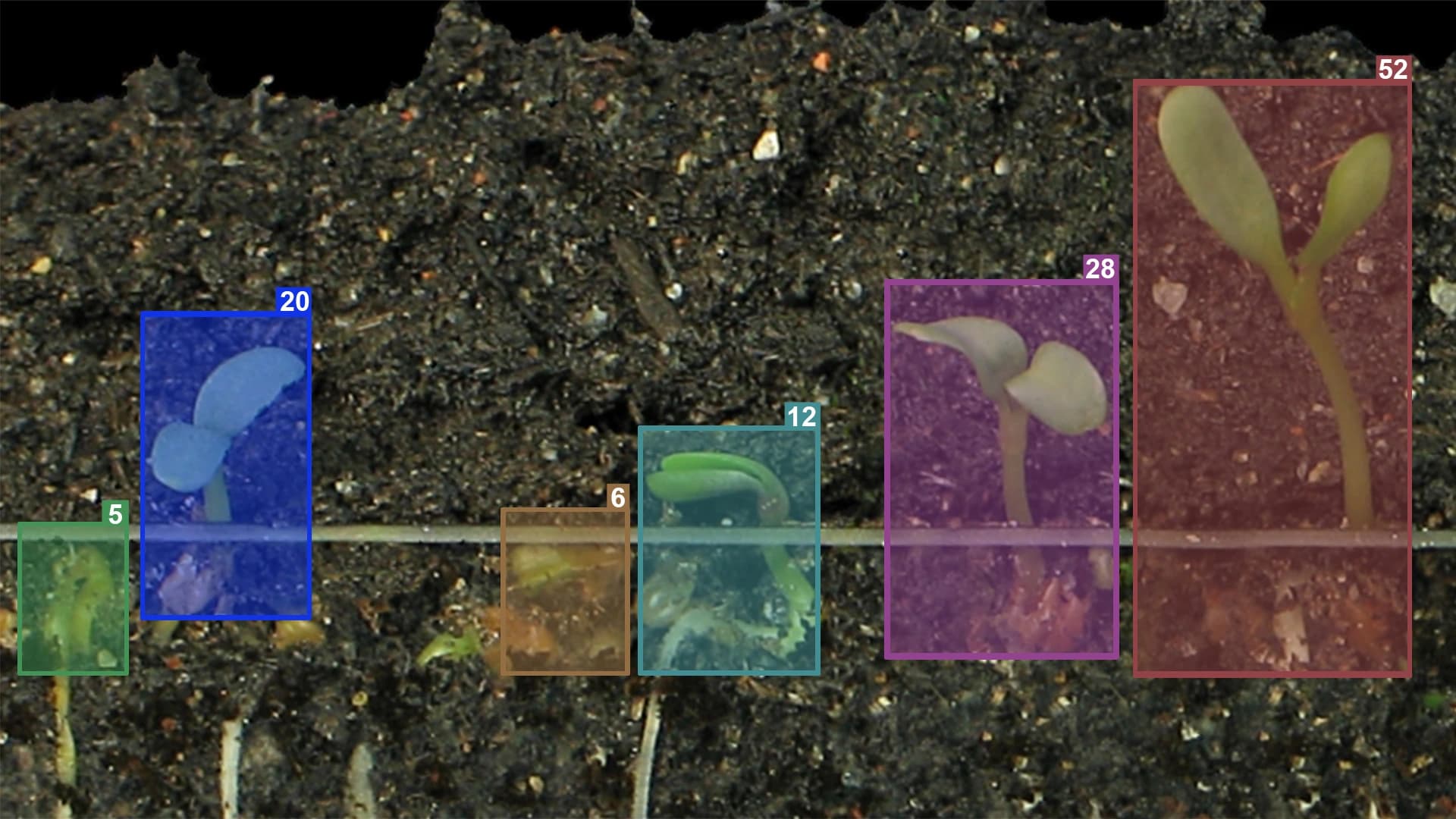
  • Through reinforcement learning from human feedback (RLHF), we provides continuous model improvement services. This capability is particularly valuable in agriculture, where environmental variability and seasonal changes create numerous edge cases that can impact AI model performance. The platform's human-in-the-loop approach ensures AI systems adapt to real-world agricultural conditions.
  • A Guide to Computer Vision in Agriculture: Mastering Data Annotation for Precision Farming with Scematics

    Technological Integration and Infrastructure
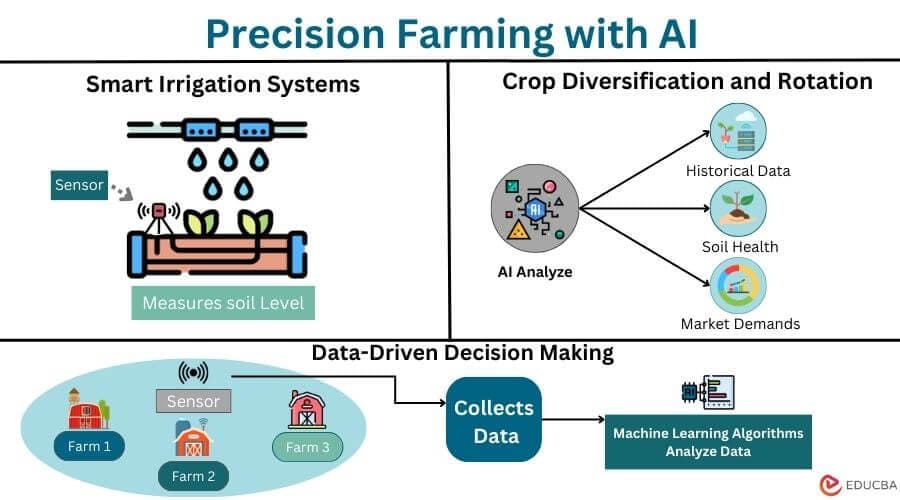
  • Successful implementation of computer vision in agriculture requires robust technological infrastructure combining edge computing, IoT sensors, and cloud-based analytics. Modern agricultural systems integrate multiple data sources including satellite imagery, drone surveillance, soil sensors, and weather data to provide comprehensive farm management solutions.
  • Edge AI capabilities enable real-time processing of visual data directly in the field, reducing latency and ensuring immediate responses to critical conditions. This distributed computing approach supports autonomous machinery operations and enables instant decision-making for time-sensitive agricultural tasks.
  • A Guide to Computer Vision in Agriculture: Mastering Data Annotation for Precision Farming with Scematics

    Sustainability and Environmental Impact
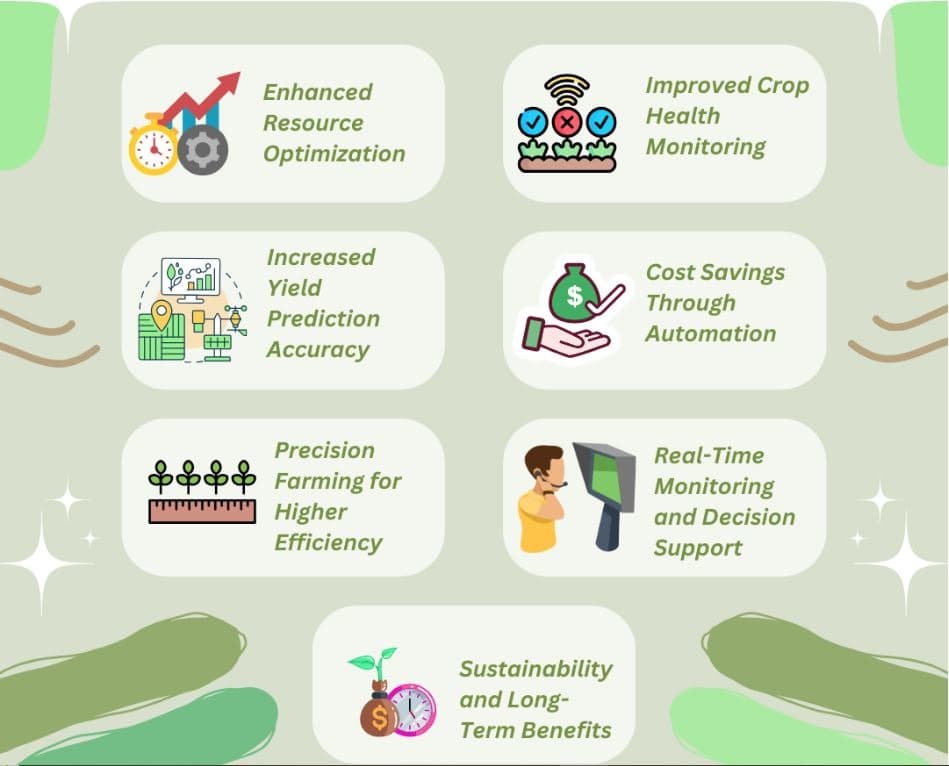
  • Computer vision technologies significantly contribute to sustainable farming practices through optimized resource utilization. Precision application of water, fertilizers, and pesticides based on computer vision analysis reduces environmental impact while maintaining productivity. Studies show precision farming can reduce fertilizer use by 66% and achieve water savings of 4% while increasing yields.
  • The environmental benefits extend beyond resource conservation. Reduced chemical inputs minimize soil and water contamination, supporting long-term agricultural sustainability. Carbon footprint reduction through optimized machinery operations and reduced input transportation further enhances the environmental benefits of precision agriculture.
  • A Guide to Computer Vision in Agriculture: Mastering Data Annotation for Precision Farming with Scematics

    Outlook and Emerging Technologies

  • The future of agricultural computer vision includes integration with emerging technologies such as quantum computing, advanced robotics, and 5G connectivity. These technologies promise even greater processing capabilities, enabling more sophisticated analysis and autonomous operations.
  • Blockchain integration provides enhanced traceability and transparency in agricultural supply chains, while IoT sensor networks deliver increasingly granular data for computer vision analysis. The convergence of these technologies creates comprehensive digital farming ecosystems that optimize entire agricultural value chains.
  • Investment and ROI Considerations

  • B2B investment in agricultural computer vision delivers substantial returns through multiple value streams. Direct cost savings from reduced labor, optimized inputs, and improved efficiency typically provide payback periods of 1-3 years. Indirect benefits including improved crop quality, enhanced market access, and reduced risk further contribute to positive ROI.
  • The scalability of computer vision solutions makes them attractive for various farm sizes and types. Small-scale operations benefit from cost-effective drone services and mobile applications, while large commercial operations implement comprehensive automated systems. This flexibility ensures broad market applicability and sustainable business models.
  • Conclusion

  • Computer vision technology represents a transformative force in modern agriculture, enabling precision farming practices that address global food security challenges while promoting environmental sustainability. Through partnerships with specialized data providers like us, agricultural AI systems achieve the accuracy and reliability necessary for successful field deployment.
  • The combination of robust market growth, proven ROI, and continuous technological advancement makes agricultural computer vision a compelling investment opportunity for B2B markets. As technology costs decrease and capabilities expand, precision farming through computer vision will become increasingly essential for competitive agricultural operations.
  • The future of agriculture depends on intelligent systems that can process vast amounts of visual data, make autonomous decisions, and optimize resources in real-time. Companies investing in these technologies today position themselves at the forefront of agricultural innovation, ready to capitalize on the growing demand for sustainable, efficient, and productive farming solutions.
  • Scematics Copyrights Reserved

    Post comments

    Comments