SAM3: The Image Annotation Model

Share

In the rapidly evolving landscape of artificial intelligence and computer vision, the quest for safer, more accurate, and efficient image annotation methods has led to groundbreaking innovations. Among these, the Segment Anything Model 3 (SAM 3) has emerged as a revolutionary solution that redefines how we approach image annotation and segmentation tasks. This cutting-edge foundation model from Meta represents the safest and most reliable pathway for image annotation, combining unprecedented accuracy with open-vocabulary capabilities that transform the entire annotation workflow.​

SAM3: The Image Annotation Model

Understanding Image Annotation and Its Critical Role

  • Image annotation represents the fundamental process of identifying and labeling intended objects or features within images through a structured methodology. This meticulous practice involves selecting appropriate annotation techniques, identifying specific objects or regions, establishing reference points, and drawing annotations with precision. The annotated images serve as training data that teaches computer vision models to recognize patterns, detect objects, and make intelligent decisions without human intervention.
  • At the heart of intelligent systems lies image annotation, a critical component within the broader discipline of data labeling. While data labeling encompasses various data types including text, audio, and video, image annotation specifically focuses on visual information by adding metadata or descriptive information to images. This process effectively translates the complexity of the visual world into a language that machines can interpret and understand.
  • The relationship between image annotation and machine learning is fundamentally symbiotic. Computer vision models require vast quantities of accurately labeled images to learn effectively. During training, these models analyze annotated images to identify patterns and features associated with specific labels. Once trained, models can replicate the annotation process automatically on new, unseen images. However, the quality of initial annotations directly determines model performance any errors or inconsistencies in labeled data will be learned and perpetuated by the model, potentially compromising reliability in real-world applications.​
  • The Evolution: From SAM to SAM 3

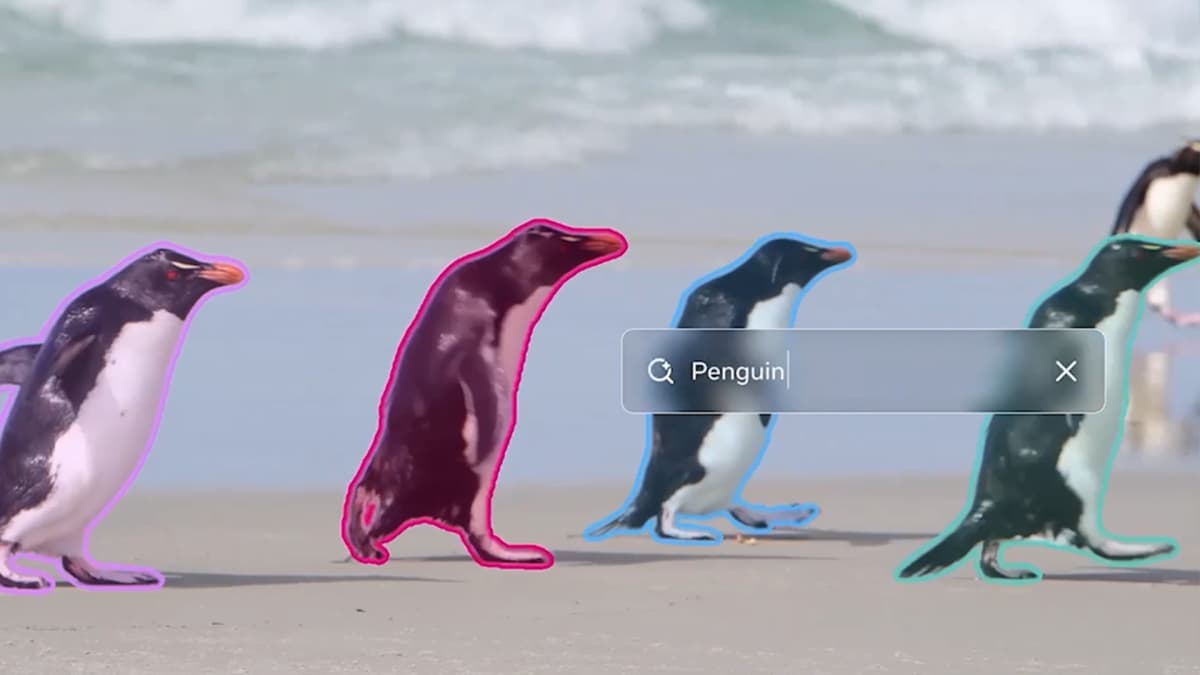
  • The Segment Anything series has progressively advanced computer vision capabilities. The original Segment Anything Model revolutionized segmentation by offering powerful zero-shot capabilities based on visual prompts such as points, boxes, and masks. SAM 2 expanded these capabilities to video segmentation, enabling temporal tracking across frames. Now, SAM 3 represents a quantum leap forward by introducing Promptable Concept Segmentation (PCS) the ability to detect, segment, and track all instances of a visual concept specified by text prompts, image exemplars, or both.​
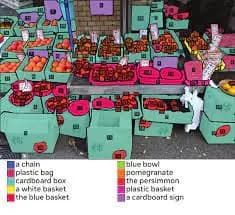
  • Unlike previous SAM versions that segment single objects per prompt, SAM 3 performs open-vocabulary instance detection, returning unique masks and identities for all matching objects simultaneously. This transforms SAM from a geometric segmentation tool into a concept-level vision foundation model capable of understanding and processing complex visual concepts.​
  • Released on November 19, 2025, SAM 3 achieves a 2× performance gain over existing systems in Promptable Concept Segmentation while maintaining and improving SAM 2's capabilities for interactive visual segmentation. On the LVIS dataset, SAM 3 achieves 47.0 average precision for zero-shot instance segmentation, compared to the previous state-of-the-art of 38.5 representing a substantial improvement.​
  • Why SAM 3 Is the Safest Approach to Image Annotation

    Unparalleled Accuracy and Consistency

  • SAM 3's safety advantage stems from its exceptional accuracy and consistency in annotation tasks. The model achieves 75-80% of human performance on the new SA-Co benchmark containing 270,000 unique concepts over 50 times more than existing benchmark datasets. This remarkable performance ensures that annotations generated through SAM 3 maintain high quality and reliability, reducing the risk of propagating errors through machine learning pipelines
  • The model's architecture incorporates a novel presence head that decouples recognition ('what') from localization ('where'), enabling superior discrimination between closely related concepts such as 'player in white' versus 'player in red'. This architectural innovation ensures precise differentiation between similar objects, minimizing annotation ambiguities that could compromise model safety and accuracy.​
  • Domain Adaptability: Lightweight adapters (MobileSAM, MAF-SAM, DSAM) show strong performance in agriculture, camouflaged object detection, and IR small-target tracking, proving SAM 2’s scalability across niche datasets.
  • Zero-Shot Generalization Capability

  • One of SAM 3's most significant safety features is its zero-shot generalization capability. The model can segment new categories immediately without requiring fine-tuning or additional training data. This eliminates the risks associated with insufficiently trained models and reduces the potential for catastrophic failures when encountering unfamiliar scenarios.​
  • SAM 3's zero-shot performance surpasses specialized models in many scenarios, demonstrating robust generalization across diverse domains including natural images, medical imaging, autonomous vehicles, agriculture, and surveillance applications. This versatility ensures consistent annotation quality regardless of the specific use case, providing a safety net for applications where annotation errors could have serious consequences.​
  • Massive Training Data Foundation

    The safety and reliability of SAM 3 are fundamentally grounded in its unprecedented training data foundation. The model is trained on the Segment Anything with Concepts (SA-Co) dataset, which comprises multiple components:​

  • SA-Co/HQ: High-quality human-annotated image data from a 4-phase data engine containing 5.2 million images and 4 million unique noun phrases.
  • SA-Co/SYN: Synthetic dataset labeled by AI without human involvement, featuring 38 million noun phrases and 1.4 billion masks.​
  • SA-Co/EXT: 15 external datasets enriched with hard negatives
  • SA-Co/VIDEO: Video annotations with temporal tracking across 52,500 videos and 24,800 unique noun phrases
  • This massive and diverse training foundation ensures that SAM 3 has encountered an extensive range of visual concepts, reducing the likelihood of encountering completely novel scenarios where annotation safety might be compromised.​​​​

    Reduced Human Error Through Automation

  • Manual annotation is inherently prone to human error, fatigue, and inconsistency factors that compromise annotation safety and quality. SAM 3 dramatically reduces these risks by automating the annotation process while maintaining high accuracy standards. The model's scalable human- and model-in-the-loop data engine achieves 2× annotation throughput through AI-assisted annotation.​
  • Studies on medical imaging annotation demonstrate that AI-assisted annotation with SAM-based models can reduce annotation time by over 80% while maintaining accuracy. This efficiency gain comes with enhanced consistency, as the model applies identical standards across all annotations rather than subjecting the process to individual annotator variability.​​
  • Comprehensive Image Annotation Techniques Supported by SAM 3

    Bounding Box Detection and Segmentation

  • Bounding boxes represent the most fundamental annotation technique, involving rectangular frames around objects of interest to mark their position and size. While traditional bounding box annotation is quick and efficient, SAM 3 elevates this capability by automatically detecting and segmenting all instances of a specified concept, eliminating the need for manual box placement on each object.
  • SAM 3 excels in bounding box detection tasks, achieving competitive performance on closed-vocabulary datasets such as COCO and LVIS while significantly outperforming baselines on open-vocabulary datasets. This dual capability ensures that SAM 3 can handle both standard detection tasks and complex open-vocabulary scenarios with equal proficiency.​​
  • Instance Segmentation with Concept Understanding

  • Instance segmentation goes beyond simple bounding boxes by providing pixel-precise masks that distinguish between individual instances of the same object class. SAM 3's concept-based approach revolutionizes instance segmentation by automatically identifying and segmenting all instances matching a text description or visual exemplar.​
  • For example, when prompted with 'yellow school bus' SAM 3 will automatically detect and generate precise segmentation masks for every yellow school bus appearing in an image or video. This eliminates the tedious process of manually segmenting each instance individually, dramatically improving efficiency while maintaining high accuracy standards.​​​
  • Semantic Segmentation at Scale

  • Semantic segmentation classifies every pixel within an image into predefined categories, providing comprehensive scene understanding. SAM 3 demonstrates strong performance in open-vocabulary semantic segmentation tasks, outperforming powerful expert baselines on datasets such as ADE-847, PascalConcept-59, and Cityscapes.​
  • The model's ability to handle complex semantic queries enables sophisticated scene analysis without requiring exhaustive pre-training on specific categories. This flexibility makes SAM 3 particularly valuable for applications requiring detailed scene understanding across diverse domains.​​​
  • Interactive Refinement and Multimodal Prompting

    SAM 3 maintains backward compatibility with SAM 2's visual prompting capabilities while adding concept-based features. Users can interactively refine segmentations through multiple modalities:​​​

  • Text prompts: Simple noun phrases describing target concepts (e.g., 'striped cat' ,'person wearing red hat')​
  • Visual prompts: Points, boxes, and masks for geometric specification
  • Exemplar prompts: Image examples of target objects for visual similarity-based detection
  • Hybrid prompts: Combinations of text, visual, and exemplar inputs for maximum precision
  • This multimodal prompting flexibility enables users to approach annotation tasks from multiple angles, selecting the most efficient and accurate method for each specific scenario. Interactive refinement allows iterative correction through positive and negative exemplars or clicks, with refinements generalizing to similar objects throughout the image or video.​

    The SAM 3 Architecture: Safety Through Design

    Decoupled Detector-Tracker Design

    SAM 3's architecture features a decoupled detector-tracker design that minimizes task interference and scales efficiently with data. The detector component uses a DETR-based architecture for image-level concept detection, incorporating:​​​

  • Text encoder for processing noun phrase prompts')​
  • Exemplar encoder for image-based prompts
  • Fusion encoder to condition image features on prompts
  • Presence head that separates recognition from localization
  • This architectural separation ensures that detection and tracking tasks don't interfere with each other, maintaining consistent performance across both image and video modalities. The presence head specifically addresses safety concerns by enabling precise discrimination between visually similar but semantically distinct concepts.​

    Perception Encoder and Memory Architecture

  • The shared Perception Encoder processes visual information for both detection and tracking tasks, ensuring consistent feature extraction across modalities. For video processing, SAM 3 employs a transformer-based memory bank inherited from SAM 2, where predictions from prior frames inform predictions in new frames.​​
  • This memory architecture enables temporal consistency in video annotations, preventing segmentation discontinuities that could compromise annotation quality. The tracker propagates 'masklets' temporal object segments-from previous frames via self-attention and cross-attention mechanisms, maintaining identity integrity across clips even under occlusion or re-appearance scenarios.​
  • Four-Stage Training Pipeline

    SAM 3's training occurs in four carefully designed stages that progressively build annotation capabilities while maintaining safety and reliability:​​​

  • Perception Encoder pre-training: Establishes foundational visual understanding​
  • Detector pre-training: Trains on synthetic and high-quality data for robust concept detection
  • Detector fine-tuning: Refines performance on SA-Co HQ dataset
  • Tracker training: Trains temporal tracking with frozen backbone to stabilize learning
  • This staged approach ensures that each component achieves optimal performance before integration, reducing the risk of instabilities or failures that could compromise annotation safety.​

    Real-World Applications: Safety Across Domains

    Medical Imaging Annotation

  • In healthcare, annotation errors can have serious consequences for patient diagnosis and treatment. SAM 3's high accuracy and consistency make it particularly valuable for medical imaging applications where safety is paramount. Studies demonstrate that SAM-based models can reduce medical image annotation time by 82-83% while maintaining accuracy levels comparable to expert manual annotation.​​
  • Medical imaging applications benefit from SAM 3's ability to identify and segment specific tissue types, anatomical structures, tumors, and lesions across modalities including X-rays, CT scans, MRIs, and pathology slides. The model's zero-shot capability enables annotation of rare pathologies without requiring extensive domain-specific training data, expanding access to AI-assisted medical imaging across diverse clinical scenarios.
  • Autonomous Vehicle Development

  • Autonomous vehicle systems require exceptionally reliable annotation for safety-critical applications. SAM 3 enables accurate annotation of road signs, traffic lights, lane markings, pedestrians, cyclists, vehicles, and potential hazards all essential for safe autonomous navigation.​​​​
  • The model's real-time processing capabilities (approximately 30ms per image on H200 GPU) make it suitable for integration into autonomous vehicle perception pipelines. SAM 3's ability to track objects across video frames ensures temporal consistency in object identification, critical for predicting vehicle trajectories and making safe driving decisions.​
  • Agriculture and Precision Farming

  • Agricultural applications leverage SAM 3 for crop monitoring, disease detection, pest identification, and yield prediction. The model's ability to process diverse visual concepts enables comprehensive agricultural surveillance without requiring specialized models for each crop type or disease category.​​​​​
  • Drone-equipped computer vision systems powered by SAM 3 can survey vast agricultural areas, analyzing crop health and identifying problems before they become widespread. The model's consistency ensures reliable monitoring across different growth stages, lighting conditions, and environmental factors.​
  • Content Moderation and Security

  • Content moderation and security applications benefit from SAM 3's ability to find all instances of specific content types across media libraries. Security systems leverage the model for threat detection, anomaly identification, intrusion detection, crowd analysis, and facial recognition.​​​​
  • The model's high precision reduces false positives that could lead to unnecessary security alerts or inappropriate content moderation decisions, while its recall ensures that genuine threats or inappropriate content aren't missed.​
  • Workflow Integration: Implementing SAM 3 Safely

    Dataset Preparation and Project Planning

  • Implementing SAM 3 begins with collecting relevant images or videos aligned with specific AI use cases. The model's open-vocabulary capabilities reduce the need for perfectly curated datasets, as it can handle diverse visual concepts without specialized training.​​​​​
  • Project stakeholders should define annotation objectives clearly, specifying required output formats (bounding boxes, segmentation masks, instance identities) and establishing validation criteria. Creating comprehensive annotation guidelines with visual examples ensures consistency when human review is necessary.​​
  • Model Configuration and Prompt Engineering

    SAM 3 offers flexible configuration options for different annotation scenarios:​

  • Concept Segmentation (PCS) mode: Use text or exemplar prompts for open-vocabulary annotation​​​​
  • Visual Segmentation (PVS) mode: Use points, boxes, or masks for geometric specification​
  • Interactive refinement mode: Combine modalities for iterative improvement
  • Effective prompt engineering maximizes SAM 3's annotation quality. Simple noun phrases like 'yellow school bus' or 'striped cat' work well for basic concepts, while complex queries can be handled through integration with multimodal large language models.

    Quality Assurance and Validation

    Despite SAM 3's high accuracy, implementing quality assurance measures ensures annotation safety. Recommended practices include:​​

  • Automated validation: Use scripts to check for common issues such as overlapping masks, missing attributes, or logical inconsistencies​​​​​
  • Sampling reviews: Randomly sample annotated data for manual verification by domain experts​
  • Metric-based evaluation: Calculate Intersection over Union (IoU), precision, recall, and mean Average Precision (mAP) to quantify annotation quality​​
  • Consensus scoring: For critical applications, compare SAM 3 outputs against expert annotations or multiple annotator consensus
  • Establishing feedback loops between quality reviewers and annotation processes enables continuous improvement and addresses edge cases or ambiguities systematically.​

    Export and Integration

    SAM 3 outputs can be exported in standard formats compatible with machine learning frameworks:​​​

  • COCO JSON: For object detection and instance segmentation tasks​​​​​
  • YOLO format: For real-time detection systems​
  • Pascal VOC XML: For various computer vision tasks​​
  • Custom formats: Tailored to specific pipeline requirements
  • Properly structured export processes include versioning information and dataset manifests to maintain traceability and enable reproducibility.​

    Performance Benchmarks: Demonstrating Safety Through Results

    Zero-Shot Performance

    SAM 3's zero-shot capabilities demonstrate its safety and reliability across diverse scenarios without fine-tuning:​​

  • LVIS dataset: 47.0 AP for zero-shot instance segmentation (previous best: 38.5)​​​​​
  • SA-Co benchmark: 2× performance improvement over strongest baselines​
  • Open-vocabulary semantic segmentation: State-of-the-art results on ADE-847, PascalConcept-59, and Cityscapes​​
  • These results demonstrate that SAM 3 can safely handle novel scenarios without requiring task-specific training that might introduce biases or vulnerabilities.​

    Few-Shot Adaptation

  • When provided with limited training examples, SAM 3 achieves current optimal performance, surpassing specialized detection models and large language models with context prompts. This few-shot capability enhances safety by enabling rapid adaptation to specialized domains with minimal data requirements, reducing the risk of overfitting or poor generalization.​
  • Video Segmentation and Tracking

  • In video segmentation tasks, SAM 3 demonstrates better accuracy using 3× fewer interactions than prior approaches. This efficiency improvement directly translates to enhanced safety, as fewer human interactions reduce opportunities for error introduction while accelerating annotation workflows.
  • The model maintains temporal consistency across frames, preventing segmentation discontinuities that could compromise tracking reliability in applications like autonomous vehicles or surveillance systems.
  • Real-Time Processing

  • SAM 3 processes images containing 100+ objects in approximately 30ms on H200 GPU hardware. For video tasks, inference latency increases linearly with the number of targets, maintaining near-real-time performance with approximately 5 concurrent targets.​
  • This real-time capability enables SAM 3 integration into safety-critical systems requiring immediate response, such as autonomous vehicle perception or industrial quality control.
  • Challenges and limitations:Maintaining Realistic Safety Expectations

    Computational Requirements

  • SAM 3 contains approximately 840 million parameters, requiring substantial computational resources (approximately 3.4 GB memory). This server-scale architecture may not be suitable for edge deployment in resource-constrained environments.​
  • For edge applications, organizations can use SAM 3 to label training data and then train smaller, faster supervised models optimized for specific detection tasks. While these smaller models lack text prompting abilities, they enable real-time inference on edge devices while benefiting from SAM 3's high-quality annotations.​
  • Domain-Specific Edge Cases

  • Despite impressive generalization, SAM 3 may struggle with highly specialized domains containing unique visual characteristics not well-represented in training data. Medical imaging modalities with unusual artifacts, extreme industrial environments, or rare biological specimens may require fine-tuning for optimal performance.​
  • Meta's research demonstrates that fine-tuning SAM 3 on domain-specific data substantially improves performance, with domain-adapted models achieving up to 32.9 point improvements in evaluation metrics. This indicates that while SAM 3's zero-shot capabilities are impressive, safety-critical applications should consider domain adaptation strategies.​
  • Complex Reasoning Requirements

  • SAM 3 excels at concept-based segmentation but may require integration with multimodal large language models for complex reasoning tasks. Queries like 'people sitting down but not holding a gift box' necessitate compositional reasoning beyond pure visual segmentation.​
  • The SAM 3 Agent, which combines SAM 3 with MLLM reasoning capabilities, achieves 76.0 gIoU on reasoning segmentation benchmarks compared to 65.0 for previous best systems (+16.9% improvement). This integration demonstrates a pathway for handling complex annotation scenarios while maintaining safety through reliable segmentation foundations.​
  • Future Directions: Advancing Annotation Safety

    Enhanced Domain Adaptation

  • Future developments will likely focus on streamlined domain adaptation procedures that enable rapid customization for specialized applications while maintaining SAM 3's safety characteristics. Automated fine-tuning workflows that require minimal expert supervision could democratize access to high-quality annotation across diverse fields.
  • Improved Edge Deployment

  • Research into model compression, quantization, and knowledge distillation techniques will enable SAM 3-derived capabilities on edge devices while preserving annotation quality and safety. Hybrid architectures that perform initial detection on-device with cloud-based refinement could balance efficiency and accuracy requirements.
  • Multimodal Integration

  • Deeper integration with language models, audio processing, and sensor fusion will expand SAM 3's applicability to complex multimodal annotation tasks. Safety-critical applications like autonomous vehicles could benefit from annotation systems that jointly process visual, LiDAR, radar, and language inputs through unified frameworks.
  • Active Learning Enhancement

  • Integration with active learning systems that intelligently select informative samples for human review could further enhance annotation safety by focusing expert attention on genuinely ambiguous cases while automating routine annotations through SAM 3.​
  • Best Practices for Safe SAM 3 Implementation

    Comprehensive Testing Protocols

  • Before production deployment, conduct thorough testing across representative datasets that span expected operating conditions. Measure performance using domain-relevant metrics and establish minimum acceptable thresholds for accuracy, precision, and recall.​
  • Human-in-the-Loop Validation

  • Maintain human oversight for safety-critical applications, using SAM 3 to accelerate annotation rather than completely replacing expert judgment. Implement review workflows where domain experts validate SAM 3 outputs, focusing attention on high-uncertainty predictions or critical edge cases.
  • Continuous Monitoring

  • Establish monitoring systems that track annotation quality over time, detecting performance degradation or distribution shifts that might compromise safety. Regular audits ensure that annotation pipelines maintain expected quality standards as data characteristics evolve.​
  • Documentation and Versioning

  • Maintain comprehensive documentation of SAM 3 configuration parameters, prompt engineering strategies, and validation criteria. Version control for annotation pipelines enables reproducibility and facilitates investigation when issues arise.​
  • Ethical Considerations

  • Consider privacy implications when using SAM 3 for human detection, facial recognition, or medical imaging applications. Implement appropriate data handling procedures, obtain necessary consents, and ensure compliance with relevant regulations such as GDPR or HIPAA.
  • Conclusion

  • SAM 3 represents a paradigm shift in image annotation, offering unprecedented safety through its combination of exceptional accuracy, zero-shot generalization, massive training data foundation, and reduced reliance on error-prone manual processes. The model's 2× performance improvement over existing systems, coupled with its ability to handle 270,000 unique concepts, positions it as the safest and most reliable approach to image annotation across diverse applications.​
  • From medical imaging where annotation errors could affect patient outcomes, to autonomous vehicles where safety is paramount, SAM 3 provides the accuracy, consistency, and reliability required for critical applications. Its open-vocabulary capabilities eliminate the limitations of fixed-category systems, enabling flexible adaptation to new scenarios without compromising safety through hasty retraining or insufficient data.​
  • The model's architectural innovations including the presence head for precise concept discrimination, decoupled detector-tracker design for task interference minimization, and staged training pipeline for robust learning demonstrate a systematic approach to building safe and reliable annotation systems. These design choices reflect careful consideration of the factors that contribute to annotation safety in real-world deployments.​
  • As artificial intelligence continues its integration into safety-critical domains, the importance of reliable annotation infrastructure cannot be overstated. SAM 3 establishes new standards for what is possible in automated annotation while maintaining the safety, accuracy, and consistency that professional applications demand. Organizations investing in SAM 3-based annotation pipelines position themselves to leverage cutting-edge computer vision technology while maintaining the rigorous quality standards essential for trustworthy AI systems.
  • The safest way of image annotation is indeed through SAM 3 not because it eliminates all challenges, but because it provides unprecedented capability, transparency, and reliability that enable informed safety decisions throughout the annotation workflow. As the field continues evolving, SAM 3 represents both the current pinnacle of annotation technology and the foundation upon which even safer, more capable systems will be built.
  • Scematics Copyrights Reserved

    Post comments

    Comments